Get in your inbox the latest News and Offers from
- Nirwant Property Management Services, 304, Fortune Business Centre, Vishnudev Nagar, Wakad, Pune - 412101, Maharashtra.

- Office Time:
- Always OpenRera Certified Broker
- Call Us:
- +91 9699 611265
- Email:
- info@nirwant.com
Why Kiwale and Mamurdi Are Becoming Pune’s Hottest Rental Hubs in 2026
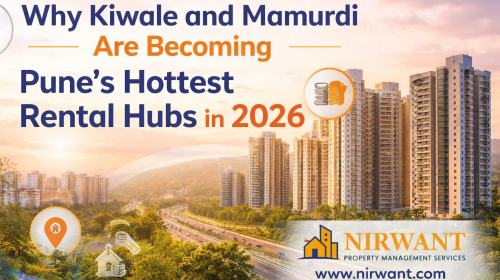
Why Kiwale and Mamurdi Are Becoming Pune’s Hottest Rental Hubs in 2026
Pune?s real estate market in 2026 is no longer about just established hotspots like Hinjewadi or Baner. A new wave of rental demand is shifting toward emerging micro-markets?especially Kiwale and Mamurdi in West Pune. These once-overlooked suburbs are rapidly transforming into high-demand rental hubs, attracting IT professionals, families, and investors alike.
So, what?s driving this surge? Let?s break it down.
1. Strategic Location Near Pune?s IT Backbone
The biggest driver behind rental demand in Kiwale and Mamurdi is their proximity to Hinjewadi?the epicenter of Pune?s IT industry. With thousands of professionals working in nearby tech parks, the need for affordable yet well-connected housing has skyrocketed.
Instead of paying premium rents in Wakad or Baner, tenants are increasingly choosing Kiwale and Mamurdi for:
- Shorter commute times
- Less congestion
- Better value for money
This ?move slightly outward, save significantly more? mindset is a key trend shaping 2026.
2. Infrastructure Growth Is Changing the Game
Infrastructure development has been a major catalyst. Improved road networks, access to the Mumbai?Pune Expressway, and connectivity to NH-48 have made daily commuting easier than ever.
In fact, Pune?s 2026 real estate growth is heavily concentrated in well-connected corridors rather than central locations, driven by infrastructure upgrades and employment access. ()
Kiwale, in particular, is benefiting from Smart City initiatives and modern urban planning, which are improving overall livability and attracting new residents. ()
3. Affordability Compared to Mature Markets
One of the biggest advantages of these areas is pricing.
Kiwale offers competitive property rates around ?8,900 per sq. ft., making it more affordable than established neighborhoods. ()
Nearby areas like Wakad and Baner command significantly higher prices, pushing renters outward.
For tenants, this translates into:
- Lower monthly rents
- Bigger homes for the same budget
- Access to modern gated communities
For investors, it means higher rental demand with a lower entry cost?a rare combination.
4. Rising Rental Yields and Investor Interest
Rental yields in emerging Pune micro-markets are becoming increasingly attractive. Across the city, well-chosen areas are delivering rental returns of around 5?6.5% in 2026. ()
Additionally, nearby zones like Punawale are already achieving around 4% rental yield, reinforcing the strength of this entire West Pune belt. ()
Mamurdi is also seeing steady appreciation in the range of 8?12% annually, making it appealing for both rental income and long-term capital growth. ()
5. Lifestyle Upgrade Without City Chaos
Modern renters are no longer just looking for proximity to work?they want quality of life.
Mamurdi, in particular, offers:
- Open spaces and greener surroundings
- Lower traffic and noise
- Better work-life balance
These factors are increasingly important for families and remote-working professionals.
Kiwale mirrors this trend with well-planned residential projects, smart homes, and community living environments?making it ideal for young professionals and nuclear families.
6. Supply of Modern Housing and Townships
Another reason these areas are booming is the availability of new-age housing.
Developers are focusing on:
- Integrated townships
- Smart homes
- Amenities like co-working spaces, gyms, and clubhouses
This aligns perfectly with post-pandemic preferences where tenants prioritize comfort, space, and lifestyle over just location.
7. Spillover Demand from Saturated Areas
As core areas like Wakad, Baner, and Hinjewadi become saturated and expensive, demand is naturally spilling over into nearby localities.
This ?ripple effect? is a classic real estate pattern:
- First, prices rise in prime areas
- Then demand shifts outward
- Finally, new rental hubs emerge
Kiwale and Mamurdi are currently at that sweet spot?early enough for growth, but developed enough for livability.
8. Migration Trends Fueling Rental Demand
Pune continues to attract professionals and students from across India due to its strong IT ecosystem, educational institutions, and better quality of life.
This migration-driven demand ensures:
- Low vacancy rates
- Stable rental income
- Consistent tenant flow
The city?s balance of affordability and opportunity makes it one of India?s most reliable real estate markets in 2026.
Conclusion: The Perfect Rental Investment Storm
Kiwale and Mamurdi are not just ?emerging areas? anymore?they are becoming the backbone of Pune?s next rental growth cycle.
With a powerful combination of:
- Proximity to IT hubs
- Strong infrastructure development
- Affordable pricing
- Rising rental yields
- Improved lifestyle offerings
?these micro-markets are hitting the perfect balance between demand and value.
For tenants, they offer better living at lower costs.
For investors, they present one of the most promising rental opportunities in Pune in 2026.
If current trends continue, Kiwale and Mamurdi may soon transition from ?hot rental hubs? to ?established real estate powerhouses.?
by
Vijay Patil
Property Acquisition & Management Consultant
www.nirwant.com | +91 9699611265 | info@nirwant.com